
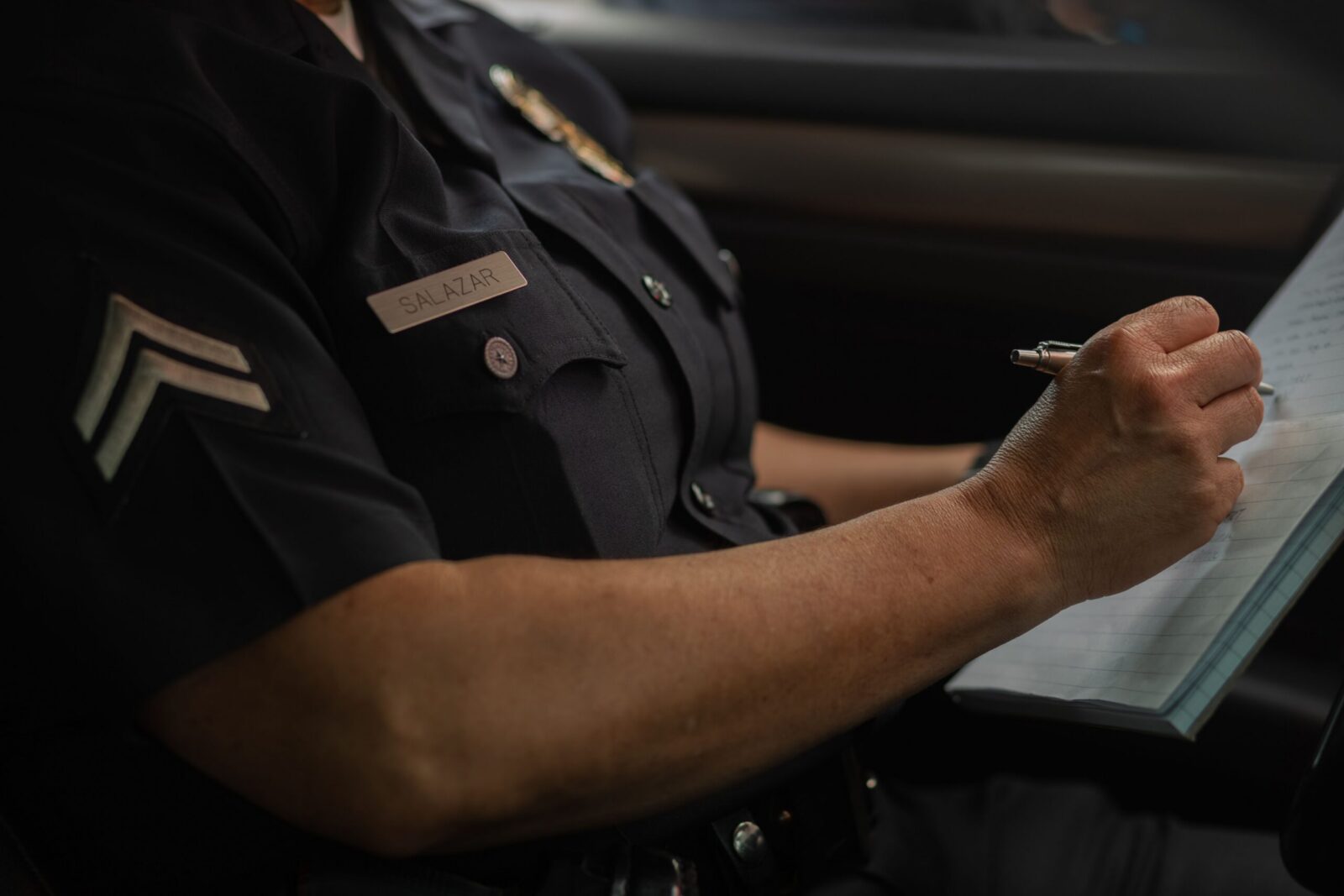
Police reports can provide important information in a California DVRO case, but filing or carrying a report into court does not automatically make every statement in it admissible. Authentication, hearsay rules, and the reliability of the report must still be considered.
Survivors May Obtain Certain Records
Victims of qualifying crimes, including domestic violence, may obtain copies of police reports, emergency-call recordings, and related evidence such as photographs of injuries.
These materials can help establish dates, identify responding officers, locate witnesses, and preserve descriptions of an incident made close to the time it occurred.
The Report Must Be Authenticated
A responding officer may testify and authenticate the report. Records may also be requested from the law-enforcement agency through its records custodian, although that process may be difficult to complete within the short schedule of a DVRO case.
Calling the officer may be particularly helpful when the report’s timing, preparation, observations, or reliability is disputed.
Statements Inside the Report Require Separate Review
A police report may qualify under an exception allowing certain official records to be considered. That does not automatically make every witness statement contained in the report admissible.
Statements attributed to neighbors, relatives, children, or other third parties may constitute additional layers of hearsay. Each layer may need its own basis for admission.
The Report Does Not Replace All Other Evidence
Photographs, emergency-call recordings, messages, medical evidence, and live testimony may corroborate or explain the report. The responding officer may also testify about personal observations that are not fully captured in writing.
A report should be formally offered and admitted into evidence. Merely referring to it or marking it as an exhibit does not ensure that the judge may consider it.
A California domestic violence attorney can obtain available law-enforcement records, address authentication and hearsay issues, and determine whether the responding officer should testify. Proper preparation can make the difference between a report being considered and excluded.
Comments are closed